
3 Lessons for a New (Old) Editor
- Jun 2, 2016
- 2 min read
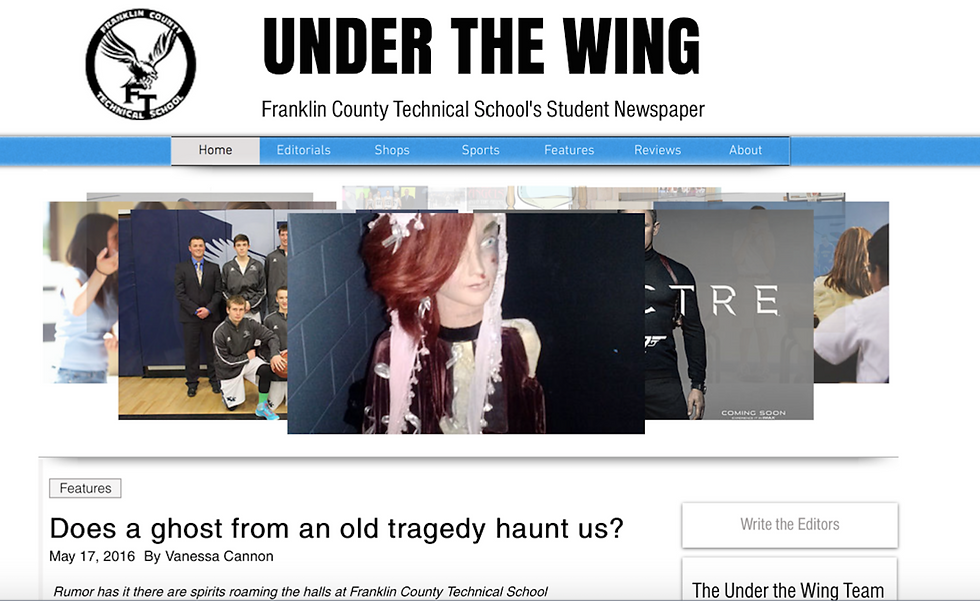
Above is a screen shot of the first online version of the Franklin County Technical School's student newspaper, Under the Wing. (We're the eagles, FYI.) In the process of advising students on this project over the past four months I've learned some valuable and unexpected lessons about digital literacy and teenagers.
1) Students don't know as much about creating content online as adults might think,but they are blown away by the possibilities. I had, in retrospect, naively expected that so-called digital natives would be savvy about creating digital content. After all, they grew up with Facebook and YouTube and Vine and SnapChat, and all those millennials I worked with toward the end of my publishing career were hip to digital formats....
In fact, for most of them their experience with digital content is no different from my own growing up watching television. Digital is a mostly passive experience. They might be savvy about what they're watching and suspicious of the motivations of content providers, but they know no more about creating content online than I knew about animating Saturday morning cartoons. That said, when shown just how easy it is now to create content online, several of my students were excited about the possibilities. And they were seniors nearing the end. They don't get excited about anything.
2) Schools are behind the curve on digital accessibility. Our school is plagued by underpowered servers, a censorship-happy firewall, balky wi-fi, wary administrators, an undermanned IT staff and out-of-date equipment. And our vo-tech school has "technical" in its name. Still an informal survey of other rural schools suggests this digital deficit is a common state of affairs. That means when planning a lesson, teachers have to be prepared with a Plan B when the technology they were counting on doesn't cooperate, even after they've tested it. And don't even think of going live without testing.
3) Schools are also behind the curve on teaching digital skills. For all the talk about the need to teach digital literacy and digital citizenship, many students are woefully underprepared for a college and work world in which comfort with accessing, analyzing and creating digital content is the entry ticket. That has to change and, unlike with much "reform" in schools these days, Common Core isn't the guiding (or, depending on your point of view, misguided) light. The standards set there are uncharacteristically soft.
Instead of bemoaning the fact that students no longer know cursive, I'd posit we should be way more concerned about how many of them can't do much with presentation software.





Comments